


IS AN ELECTRIC VEHICLE RIGHT FOR ME?
The future of the automobile industry is electric. Every year electric cars are getting cheaper and more advanced, and every year more and more consumers are purchasing electric cars. Depending on where you live, you may see electric cars every day on the road. There are some key differences between electric cars and the gas powered cars that you are used to and here we'll explore both the benefits and the disadvantages of owning electric.
Questions to Ask Yourself When Considering Electric
Daily Commute
Is Your Daily Commute Under 330 Miles?
Most of today's electric vehicles have a driving range-per-charge between 50 to 330 miles. If your daily commute is under 250 miles per day, there is likely an affordable EV model that will fit your needs.
BUYER TIP: When you're looking at EVs, be sure to check the "range-per-charge" for the vehicle. This is the number of miles the car can typically drive between full charges. For example, if the range per charge for an EV is 100 miles and your daily commute is 30 miles, you should be able to go about 3 days between charges (30mi + 30mi + 30mi = 90mi). EV range varies significantly between models.

Road Trips
Do You Frequently Take Long Road Trips?
Long road trips can present challenges for today's electric vehicles. Public charging and battery technology is continually improving, but planning is still required for long trips. There are many EV models available with a range-per-charge of 150 to 250 miles. There are some high-end EVs that can get over 330 miles on a single charge.

Your Household
Does Your Household Have More Than One Car?
If you live in a household with more than one car, an EV likely represents a big opportunity for your family to save a lot of money, while improving the quality of our environment. Use an EV for commuting and use the other vehicle for long distance drives... it's that easy!

Parking
Do You Have Off-Street Parking At Your Home?
Plugin electric vehicles require charging. Charging can be done with a standard 120V outlet or you can have a 240V charger installed in your garage or driveway. Known as "Level 2 EVSE equipment," 240V charging reduces charging time substantially, is more energy efficient and some EVSE models allow you to schedule charging times, which may allow you to take advantage of special electric rates.

Save Money & Pollute Less
Do You Want to Save Money AND Pollute Less?
EVs cost less to drive and pollute less, period. An EV uses electricity that is typically generated from sources that are cleaner than burning gasoline or diesel in a vehicle.

It Might Not be the Right Time If..
An All-Electric EV Might Not be Right For You at This Time If...
• you commute 300 or more miles per day.
• you do not have off-street parking as it may be difficult to charge your EV at home.
• you regularly take long road trips - EV charging may not be convenient. Note, BEVs have ranges from 80 to more than 300 miles per charge, which is similar to the range of some gas-fueled cars.
BUT, keep in mind, EV range is steadily increasing every year, and there is probably a Plug-in Hybrid Electric Vehicle (PHEV) that would be a good fit for you. While PHEVs still use gasoline and require oil changes, many models have an all-electric range that will meet your daily commuting mileage needs.
THINGS TO KNOW ABOUT EVS
There are various types of EVs available; these are the three most common:

Battery Electric Vehicles have a battery and an electric motor instead of a gas tank and an internal combustion engine. Sometimes BEVs are also referred to as "All Electric Vehicles" or "Plug-in Vehicles" (not to be confused with Plug-in Hybrid Electric Vehicles). They run entirely on electricity and do not produce any exhaust from the burning of fuel.

Plug-in Hybrid Electric Vehicles have an electric motor AND a gas-powered internal combustion engine. Some PHEVs operate exclusively, or almost exclusively, on electricity until the battery is nearly depleted, then the gasoline-powered engine turns on to provide power. Like Battery Electric Vehicles, PHEVs can be plugged in to charge the battery when the vehicle is not in use.
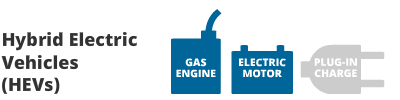
Hybrid Electric Vehicles have an electric motor AND a gas-powered internal combustion engine, and don't plug-in for charging. HEVs can have substantial range on a single tank of gas, but they still burn fossil fuel, produce carbon emissions, require trips to the gas station and scheduled engine-maintenance. An HEV may be an ideal choice for those with extended commutes and limited charging system access.
THE BENEFITS
Electric vehicles offer several advantages over conventional fuel-powered vehicles. These include, but are not limited to: lower operating costs, reduced emissions, low maintenance needs, high performance, and convenience.

SAVE TIME AND MONEY
Without all of the usual engine upkeep - oil changes, transmission fluid flushes, engine belt replacements - you'll spend less time and money on maintenance. Plus, when compared to a new gas-powered vehicle of the same size, the EPA estimates that EV vehicles could save you as much as $5,000 in fuel costs over five years. Depending on where you live, you may also qualify for state or local rebates and incentives too. Plus, EVs come with a long battery warranty and great financing options. But savings are just the beginning - the perks of living electric go on and on.
EASY CHARGING
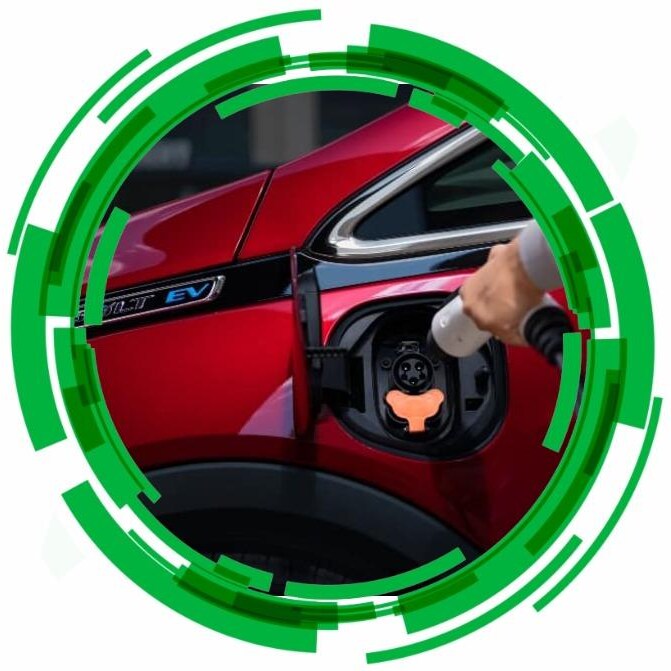
Charging is as easy as plugging in your smartphone. Your EV comes equipped with Level 1 charging which means you can simply plug in anywhere there's a 3-prong outlet. Get a quicker charge with an in-home 240-volt charging unit or you can always top off your charge on the go - just search for a public charging station near you using the myBrand Mobile App with Energy Assist. Energy Assist helps you locate more than 40,000 compatible charging stations - and they're all available to you regardless of the charge point operator. Whether at home or away, EV makes plugging in as simple as 1-2-3.
INNOVATIVE TECHNOLOGY
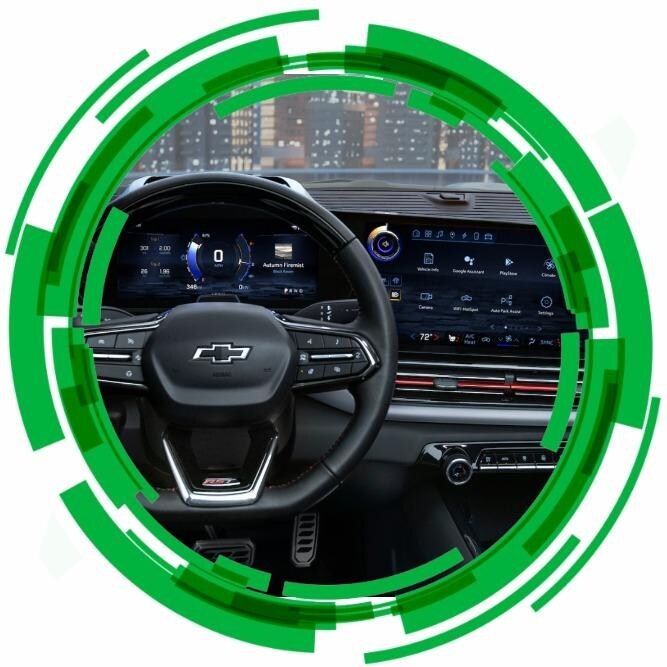
Enjoy next level tech and design. Everything from battery life to driving history is easy to view on the tablet-like display screen. You can even track real-time vehicle information to help you maximize efficiency. Even more, the revolutionary Ultium Platform is engineered for range, power and flexibility to charge fast, run long and fit every type of vehicle.
FUN TO DRIVE
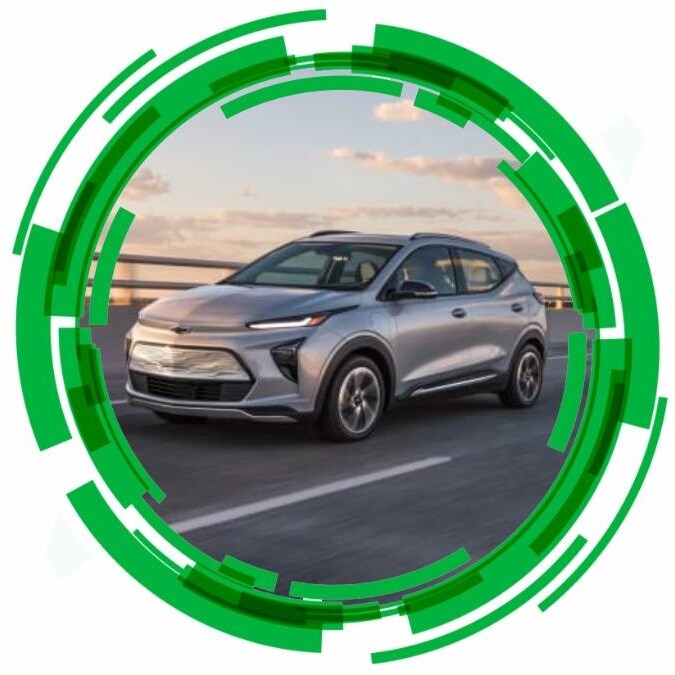
Ready to go electric or just explore the idea? Consider the new EV vehicles of Chevrolet, like the Silverado EV or Bolt EUV . They take you where you want to go, 100% gas-free. Impressive range, eye-catching style, spacious interior and surprisingly strong acceleration make it fun to drive on any road. The best part about your new EV? How fast you'll get used to driving by gas stations. Come test drive an EV today at Sleepy Hollow Chevrolet Caledonia and see for yourself!
CHARGING IS EASY
Charging your vehicle is as simple as plugging in your smartphone. Whether it's starting your day with a full charge or utilizing a network of over 40,000 public stations, Chevrolet provides the tools to ensure a convenient experience.
CHARGE ANYWHERE.
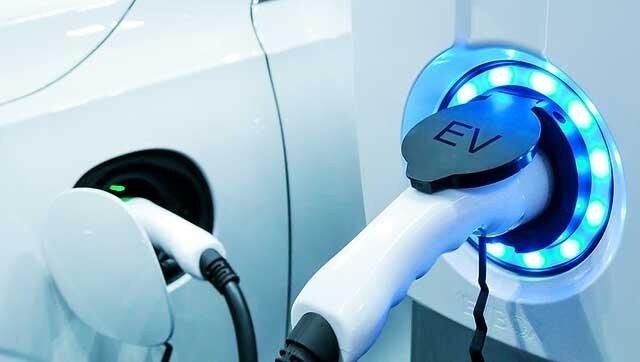
Standard 120-Volt Portable Charge Cord
Offers about 4 miles of range per hour of charge and is a great option for overnight charging. Just plug in anywhere there's a 3-prong outlet.
Important Information
CHARGE AT HOME.
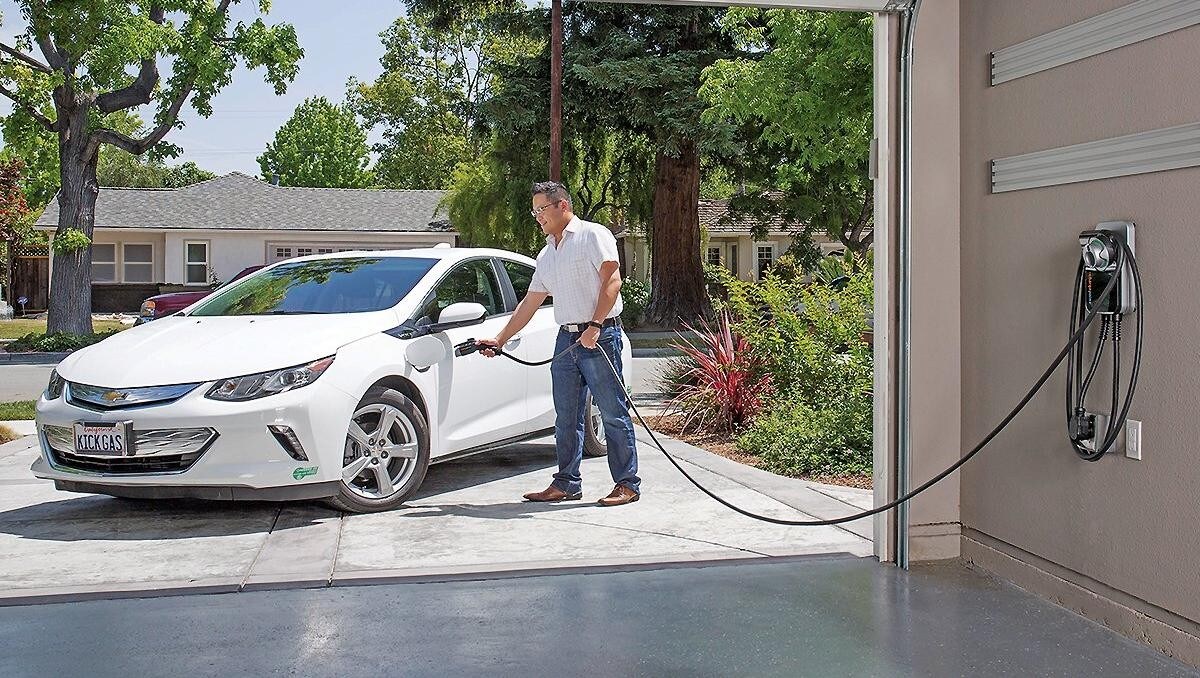
Available 240-Volt/32-AMP Charging Unit
Offers up to 25 miles of range per hour of charge time and is the fastest, most recommended way to charge at home (professional installation required).
Important Information
CHARGE ON THE GO.
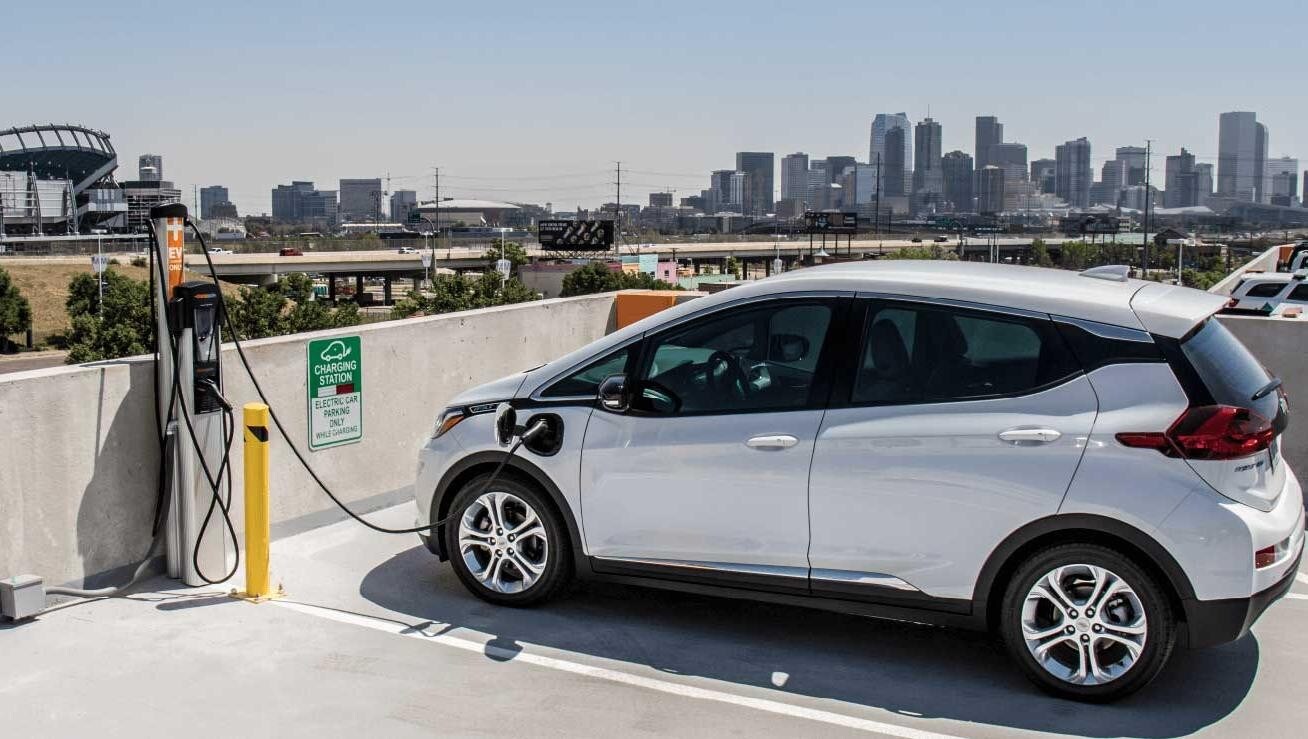
Available DC Fast Charging
Offers up to 100 miles of range in about 30 minutes of charge time and is available for public use.

Electric vehicle batteries are typically designed to last for the expected life of the vehicle, but battery life should be considered when calculating the extended cost of ownership, as all batteries eventually wear out and must be replaced. Battery replacement is typically costly, but keep in mind that gas powered vehicle equipment, such as motors and transmissions, have a lifespan too. The rate at which batteries expire depends on the type of battery and how they are used.
The failure rate of some electric vehicles batteries already on the road is as low as 0.003%. There are also high mileage warranties on electric vehicle batteries available with many manufacturers. Several manufacturers offer multi-year and 100,000 mile+ warranties on the batteries in their vehicles. Review manufacturer information carefully when selecting an EV model.

Emissions
EVs produce no tailpipe emissions. Even when the power is generated using fossil fuels, electric vehicles usually show significant reductions in overall global carbon emissions over gasoline vehicles due to the highly carbon-intensive process of mining, pumping, refining and transporting gasoline.
Energy Efficiency
Internal combustion engines are relatively inefficient at converting fuel energy to propulsion as most of the energy is wasted as heat. Electric motors are more efficient in converting stored energy into propulsion, and electric-drive vehicles do not consume energy while at rest or coasting. Additionally, regenerative braking can be used to recapture energy during braking. Typically, conventional gasoline engines effectively use only 15 percent of the fuel-energy content to move the vehicle or to power accessories, while electric-drive vehicles have on-board efficiency of around 80 percent.
Electric cars are not completely environmentally friendly as there can be significant issues to consider related to energy and material use in the manufacturing process. This may include energy-intensive manufacturing processes or the mining and refinement of chemicals and materials.

The average U.S. household spends nearly one-fifth of its total family expenses on transportation, so saving on fuel can make a big difference in the average family's budget. Electricity is less expensive than gasoline and EVs are more efficient than gas-powered vehicles. Electric prices are also generally much more stable than gasoline prices. On a national average, it costs less than half as much to travel the same distance in an EV than a conventional vehicle. Your savings could be far more substantial if your current gas-powered vehicle gets poor mileage.

Battery Electric Vehicles (or BEV) require less maintenance than conventional vehicles because there are fewer fluids (like oil and transmission fluid) to change, and far fewer moving parts. EVs require minimal scheduled maintenance to their electrical systems, which can include the battery, electrical motor, and associated electronics. Because of regenerative braking, brake systems on EVs typically last longer than they do on conventional vehicles.
- No Oil Changes: BEVs do not require engine oil, so there are no oil changes (normally required every 3,000 to 7,000 miles; requirements vary by automobile manufacturer)
- No Spark Plugs and Wires: BEVs do not require spark plugs and wires, so no replacements (estimated replacement at 100,000 miles on gas engine) are needed.
- No Exhaust System: BEVs do not have mufflers or catalytic converters, two components of your exhaust system that can fail and result in expensive replacements.
Hybrid Electric Vehicles (HEV) and Plugin Hybrid Electric Vehicles (PHEV) have an electric motor and a gas motor. Cars with gas motors still require the standard maintenance a regular gas-powered vehicle requires (oil changes, spark plugs and wires, exhaust systems etc.), but at less-frequent intervals.
THE DISADVANTAGES
It is important to consider both sides of the equation when deciding if an EV is right for you. Despite the massive push in this country to move to a greater number of electric vehicles, there remain several potential disadvantages to owning and operating an electric vehicle. There is no doubt that the future is electric and as both the adoption rate of EVs increase and the underlying technology matures, these downsides will become less and less of a factor.
FINDING A CHARGING STATION
Currently, there is no real comparison between the number of gas stations vs charging stations. For many who might charge at home every night and don't regularly need access to other charges this is only a minor factor. There has been a rapid increase in the number of charging stations across the country in the last 5 years. According to statista.com, the US had over 40k charging stations as of Feb 2021. This number will only go up as adoption of EV increases. There has also been a big push from automakers to help accelerate the growth of charging stations which should help alleviate this issue in the years to come. One example is the recent GM partnership with EVgo (the largest public fast-charging network in the US) to add more than 2,700 more stations in public venues over the next five years.
CHARGING TAKES LONGER
One thing gas has over electricity is how quickly you can refill the tank. Filling up at a gas station takes two to three minutes. Recharging an electric car can take hours to fully charge. The time will vary on the model of the car and the throughput of the charger. Newer fast chargers are rated for a higher wattage and can charge up a battery to around 80% in about 30 minutes. As the technology matures, this time should continue to decrease. For many, this is not a concern as they drive less than the range of their EV most days, but for those who need to drive longer distances regularly this should be a consideration.
THE DRIVING RANGE ON A FULL CHARGE
The range of electric cars has increased with battery technology in recent years. It is now not uncommon to see new electric cars with an effective range over 300 miles. The 2022 Bolt EUV is rated for 250 Miles on a full charge, and the 2022 Silverado has a listed 400 mile range on a full charge. For comparison, gas powered cars can typically boast a range around 400 miles per tank of gas. If you do frequent long drives, then the range should absolutely be a consideration in your purchase decision.
HIGHER INITIAL PURCHASE COST
While it is true that all electric cars cost less to operate then their gas-powered cousins, the lower ongoing costs typically come at the tradeoff of a higher purchase price. The current price gap between equivalent models seems to be around $10,000, but this gap should continue to decrease as the technology matures. Despite this, EVs tend to cost less over the lifetime of the vehicle when you factor in gas and maintenance. However, there are often state and federal incentives and rebates that can close some/all of this purchase gap. Please contact us for more information as these rebate programs can and do change.
EV Vehicles from Chevrolet
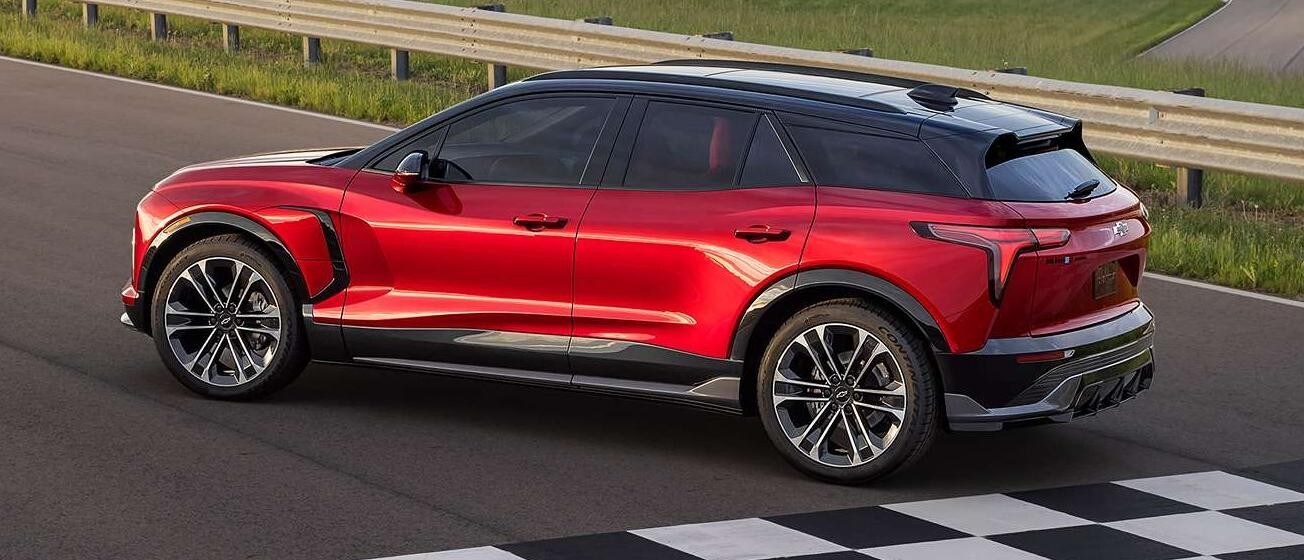
2024 Blazer EV
Reimagine What an SUV Can Be.
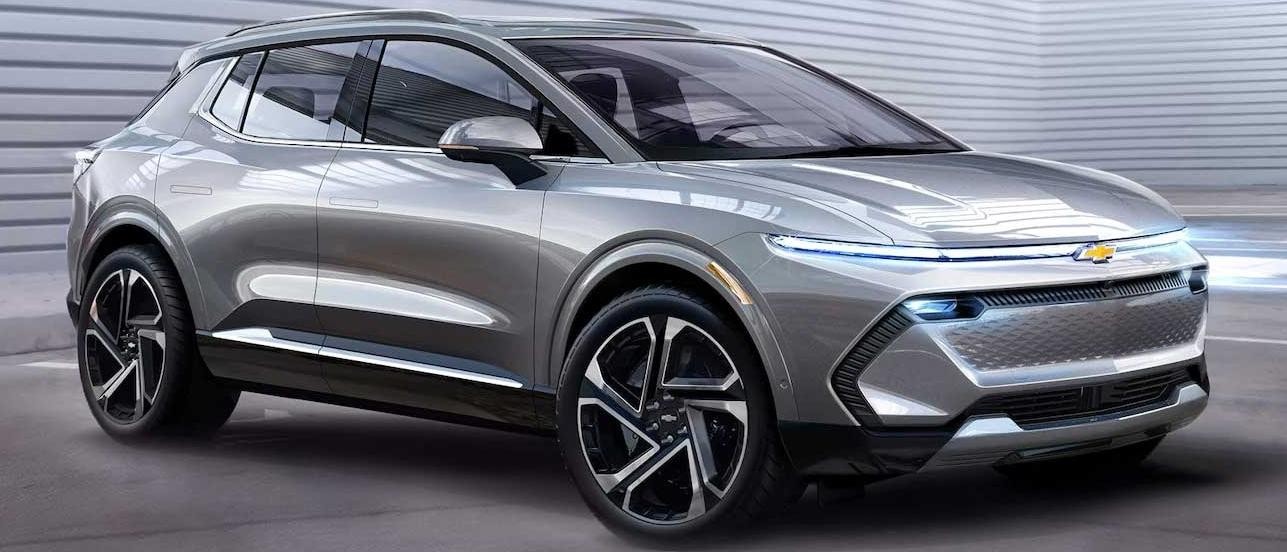
Meet the first ever all-electric Blazer EV. Blazer EV is the complete package with style, performance and technology. Available in multiple trims, colors and battery ranges, this daring new all-electric midsize SUV is built from the ground up around the game-changing Ultium battery platform.
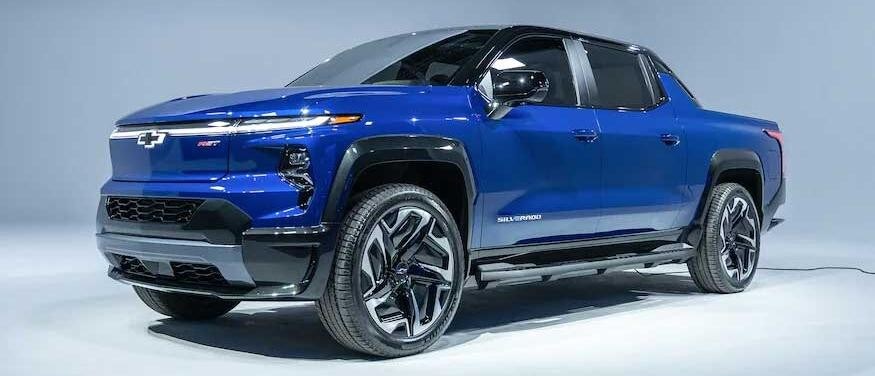
2024 Silverado RST
Charge Up Your Imagination.
Introducing the first-ever all-electric Silverado.
Smart. Agile. Aerodynamic. Fast. Not typically what you think of when you think of a truck.
But Silverado EV isn't just a truck. It's a category-defying, boundary-breaking game changer.
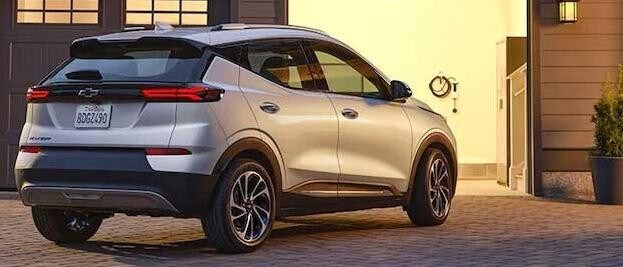
2022 Bolt EUV
Welcome to the Electric Future.
What does an all-electric future look like? It looks sleek, with bold styling that gives way to a roomy, refined interior.
It looks bright, with an illuminated charge port for convenience and flair.
The all-electric future looks like the New Bolt EUV. And it's here today.
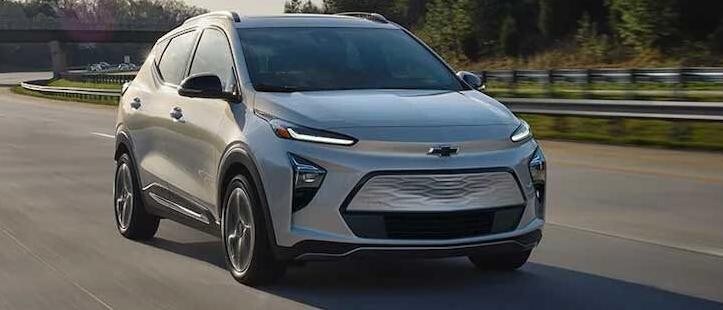
2022 Bolt EV
Redesigned 2022 Bolt EV.
Technology: Limitless. Seamless.
Performance: Hello open roads.
Charging Made Easy.
2022 Bolt EV comes standard with Chevy Safety Assist * - a suite of our advanced safety features designed to let you go confidently ahead.

Already an EV Owner?
EV Charging Station Home Installation
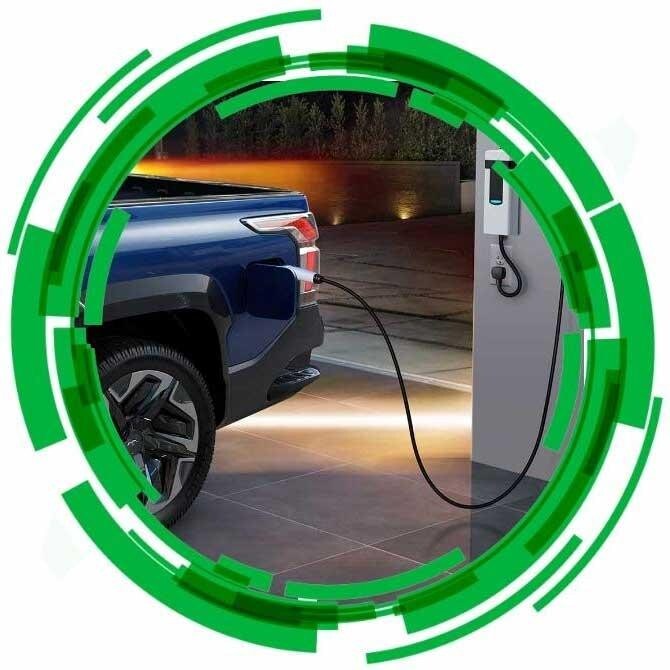
The ability to charge at home should play heavily into a consumer's decision to purchase an electric vehicle. This partnership removes perceived barriers to finding a reputable, cost-friendly EV charging station installer. Through Qmerit, EV owners will be able to fill out a simple online survey and be provided with up to three competitive installer quotes. The survey will ensure quotes are precise based on the unique characteristics of the owner's home.
EV Charging on the Go Now Easier Than Ever
Energy Assist, first available for customers in 2017, currently enables EV owners to plan and manage their routes more effectively, locate available charging stations - both along their route and in the area - monitor their route and receive real-time alerts if their range projections change dramatically. Energy Assist is integrated with data from the vehicle, which enables intelligent planning and precise charge time predictions.


-
Memering Motorplex
1949 HART ST
VINCENNES, IN 47591
- Sales: (812) 291-1676
Loading Map...
Sources
U.S. Department of Transportation, Bureau of Transportation Statistics, the Omnibus Household Survey.
U.S. Department of Energy - Energy Efficiency and Renewable Energy Alternative Fuels Data Center, Maintenance and Safety of Hybrid and Plug-In Electric Vehicles.
Shah, Saurin D. (2009), Plug-In Electric Vehicles: What Role for Washington? (1st edition). The Brookings Institution. pp. 29, 37 and 43.
U.S. Department of Energy - Office of Energy Efficiency and Renewable Energy, Saving on Fuel and Vehicle Costs.
Disclaimer
Some of these facts are provided by ChooseEV. Some numbers and statistics in this content may be estimates and subject to interpretation.
Many factors must be taken into account to determine the total cost of ownership of EV and traditional gas-powered vehicles.
This information is provided to give consumers a general understanding of EV concepts and opportunities.
Customers should review information from EV manufacturers before making a purchase decision.
More EV Resources
https://en.wikipedia.org/wiki/Electric_car
https://www.caranddriver.com/research/a32758614/electric-cars-pros-and-cons/
https://www.solarreviews.com/blog/10-pros-and-cons-of-electric-cars
https://www.nrel.gov/news/program/2020/ev-charging-stations-continued-strong-growth-in-early-2020-nrel-report-shows.html
https://www.statista.com/statistics/416750/number-of-electric-vehicle-charging-stations-outlets-united-states/
https://cars.usnews.com/cars-trucks/charging-your-ev-without-a-home-charger
https://www.edfenergy.com/electric-cars/batteries
https://afdc.energy.gov/fuels/electricity_charging_home.html
https://afdc.energy.gov/calc/
https://www.jdpower.com/business/press-releases/2021-us-electric-vehicle-experience-evx-ownership-study
https://www.capitalone.com/bank/money-management/life-events/do-electric-cars-save-money/
https://www.fueleconomy.gov/feg/taxevb.shtml